Tuesday, April 5, 2022

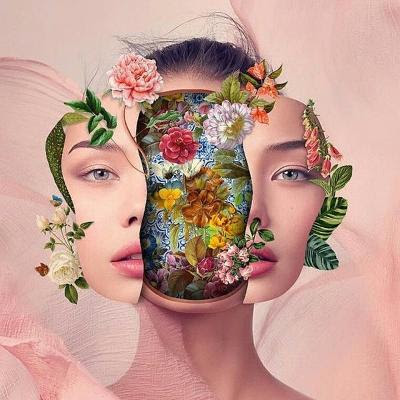
You are a Ghost Somewhere


You were so beautiful...
until you lost your mind and fucked-up your face forever,
when there was nothing wrong with it in the first place.
 
You were always a nervous wreck,
vibrating and gyrating at such a high pitch
only certain animals could hear it.
 
All the men were too dumb for you,
dragging their knuckles on the pavement while their tongues lolled out;
you loved them this way,
but only obsessed over the highly critical ones,
the ones you could never please.
 
I was invisible beside you,
quiet and observing,
equally mesmerized by your beauty and power,
your wit and intelligence
and your tendency to jump into the deep end dragging everyone with you.
 
The first day I met you,
you climbed a ladder on the side of a Los Angeles building
wearing pink high heels while balancing a cocktail in one hand — be still, my heart!
 
I was just as stricken as those dumb apes
(including my boyfriend)
by your charms.
When I found out you could make me laugh,
there was no turning back.
 
You inspired me to think Big
and burst at my own seams with the wholeness of me.
 
But when you lost your face,
you lost everything.
Not because you were no longer beautiful,
but because your heart dried up like a raisin
inside an empty husk.
 
Everything vanished
when the appeal of your own selfies disappeared,
because your image was the core
upon which everything was based.
 
What was the point of doing anything,
since your own reflection no longer inspired you
but endlessly disappointed you from here to eternity?
 
You still had your words
but they stopped.
You still had your art
but it stopped.
You still had your songs
but you stopped.
 
Everything died with your new unimproved face.
 
My dreams grew bigger and more pronounced
consistently unaffected by my own face,
accustomed to being ancillary.
 
You are a ghost somewhere,
though still alive,
tormented by vanity and regret,
the only things ever capable of silencing you.
 
I forge on,
not as beautiful...never as beautiful,
but mostly complete.


Sunday, April 4, 2021

Miss Linda's Humanities MA Philosophy Paper on Consciousness and Lucid Dreaming: "A Dream within a Dream"

 
     I begin this essay with an example of my own lucid dreaming experience to reveal how magical and exciting it can be; literally anything you can think of, you can do in your dreams, and with a little practice and conscious awareness, you can get better and better at accomplishing this. I have included scientific facts and figures in this essay also, but want to start with my own experience first, as the main reason I chose to study this subject further for HUMA 520, Self: Body and Mind, is that I have experienced the thrill of lucid dreaming first hand and wanted to dive into the subject deeper. To clarify, lucid dreaming is the awareness of being in a dream; the conscious awareness of being in a dream while asleep, or as Stephen LaBerge (one of the founders of lucid dreaming research) puts it: “Knowing that you’re dreaming while continuing to dream” (Konkoly, 1:08).

     My recurring lucid dream: I wake up. I look toward my nightstand next to me and see the digital clock that I don’t have there flashing “12:00”…I realize immediately that I’m dreaming, and that I’m aware I’m dreaming. This is called a lucid dream “marker”. Another marker: I wake up. I attempt to turn on my bedside lamp. I turn the switch, but the light does not go on. My heart begins to race…I know I’m dreaming. Just to make sure, I get up out of bed and go into the bathroom where I try the light switch there: no light ensues. This is another marker, my affirmation that it’s time to start flying while I can, while I have the chance. Why waste time on anything else? I start to flap my arms like a giant bird, and begin to levitate off the floor. I rise and then fly around my bedroom for practice, testing my “wings”, then approach my balcony and take a leap of faith, literally, into the star-filled night sky, and soar and spin and glide until I ultimately scare myself into waking up, for real this time, back into the mundane physical world where a non-illuminated light bulb is just burned-out, and is not a marker or symbol of anything. I find myself curled-up quietly, in the same position I fell asleep in.
     Markers were also used in the 2019 lucid dreaming study at Northwestern University. Unbeknownst to their research team at the time, three other similar studies were underway in France, the Netherlands, and Germany (with thirty-six participants total); they all reached the same conclusion, independently – a lucid dreamer could be engaged in two-way communication during the REM, Rapid Eye Movement, sleep stage (90% of all lucid dreaming happens in this sleep phase, which occurs mostly near the end of the sleep cycle), and could be influenced by external stimuli to affect the environment inside their dreams. These Neuroscientists’ findings were published in the journal, Current Biology.
     These teams of lucid dream researchers connected to the dreaming participants by asking them direct, simple questions, then asking them to respond with eye movement to the left or the right for a yes or no answer. They were also able to solve simple mathematical problems, such as “What is eight minus six?” by moving their eyes to indicate their answers. When the participants woke up, they were asked how the “outside” voices came through to them within their dreams, and they said via various sources, such as a radio, television, or video game in the dream. The researchers also used flashing lights, such as strobe lights, in the laboratory, and the dreamers reported seeing flashing lights in their dreams, corresponding to these flashing lights in the external laboratory world. Other sounds besides vocal questions were made also, which the dreamers reported hearing upon waking up. These lucid dreaming studies bridge the gap between the conscious and subconsciousness mind.
     Now you may be intrigued enough to wonder what you can do to achieve a lucid dream state yourself. Dr. Achilleas Pavlou, a lucid dream researcher, has some tips: he says the more you lucid dream, the easier it gets to reach that state, so with a little patience (or a lot of patience, in my own humble experience) and repeated practice, you will find it’s like any other skill you want to learn…it will come to be easier and feel more natural with time.
     Pavlou also states that creative thinking in general lends itself to lucid dreaming, so thinking creatively or “outside of the box” thinking can enhance not only your waking hours, but your dream-time too. Resorting to creative alternatives in your conscious, waking state seems to bleed over into your subconscious dreaming state. I personally found that when I took more risks in my lucid dreaming state, that bled over into my conscious state, and gave me more confidence in taking risks and chances in “the real world”.
     There are also apps available to guide you into a lucid dreaming state; one was created by Neuroscientist Ken Paller of Northwestern University called “Lucid”. Once the app is activated, it plays sounds six hours after being set. Studies have shown that it has induced lucid dreaming in 40% of its users. I have been experimenting on my own, and setting my snooze alarm as I wake up and drift back to sleep; I’ve found that I do start dreaming again, but so far no lucid dreams have appeared for me this way, which are very different from regular dreams.
     Another easy method toward lucid dreaming is keeping track of your dreams in a dream journal. It’s best to write down your dreams as soon as you can upon waking, and describe not only all of the details you can remember, but also the feelings you experienced inside the dream. The more your conscious mind becomes aware of what just happened in the subconscious dream world, the more those two parts of the brain feel more easily joined (from what I’ve experienced). You could write your dreams by hand on paper, type them up, or record them into a recording device…the most important thing is being consistent in this practice. And, if nothing else, you will gain more insight into your own subconscious mind, which is a plus in and of itself.
     Another easy method for becoming more aware in your dreams is to tell yourself throughout the day, “The next time I am dreaming, I will remember to realize that I am dreaming” (Konkoly, 4:21). Tell yourself this repeatedly throughout your waking hours, and while you’re in bed before you go to sleep at night. Let your conscious mind know to remain vigilant, even while it’s “asleep”. Another technique that is similar is to remember the last dream you had while falling back asleep…remember every detail, and try to recreate the previous dream with a conscious awareness of it, and what you would like to enact in it the next time; this is called the Mnemonic Induction Technique.
     In addition to exploring extreme adventures through lucid dreaming, it has other benefits as well, the main one being that it could provide insight into how consciousness itself is formed (as these studies are relatively new, much more research will need to be done to delve deeper into this dense subject). In a more practical way, it could be utilized as a treatment for chronic nightmares and Post Traumatic Stress Syndrome (PTSD) by having the dreamer face his or her fears within the dreamworld, thereby hopefully eliminating them both in the conscious and subconscious realms. Another practical benefit would be to use lucid dreaming time as a way to practice or rehearse motor skills; many musicians, dancers, and athletes have used their dream time as a way to hone their waking skills while asleep, and many have discovered solutions to their “problem” while dreaming the answer.
     The greatest benefit (to me) is that lucid dreaming helps us to develop more compassion:
We feel an ego separation in the waking world, between who we are and the world going on around us. This is an ego-based perspective. When you’re dreaming, you have more of a situation-based perspective, where everything in your dream is created by your mind; everything is connected, rather than separate. This situation-based experience enables you to experience things from another’s perspective, and make the best choices for each given situation, rather than reacting from an ego perspective. This gives you more compassion in your daily life. (Konkoly, 9:37)
Having more compassion in our daily lives means that we treat not only others, but ourselves with more kindness, understanding, and generosity, making the “real world” a much better place to reside in.
     So, let’s say you find yourself inside a lucid dream…now what? You could perform a “Reality Test” as I did in my lucid dream, where I turned on light switches that did not produce light, leading you to realize that you’re dreaming. Dr. Konkoly says that she wears a certain bracelet every day, so in her dreams she checks to see if it is on her wrist – if it’s not, she knows she’s dreaming. You can work toward recognizing these “markers” or symbols in your dreams (everyone’s symbols will be different), then work toward gaining control of your actions and environment within the dream. For me, personally, when I first started lucid dreaming I would notice a marker, realize I was dreaming and then scare myself awake. Being “aware” within your dream takes some courage, as at first it can feel a little scary and unfamiliar. Just like in the “real world” anything can happen in your dreams…and even more unpredictable and bizarre things can happen while dreaming, so courage and perseverance is definitely helpful.
     Speaking from my own experience, my lucid dreaming has been happening over decades of my lifetime, and is always random and unplanned. Even though I have listed several techniques to “get you there”, lucid dreaming has always caught me by surprise, when I was busy and preoccupied with other things. What has remained constant for me are my “markers” and my great sense of wonder at the adventure presented before me, as some kind of gift…from my conscious or subconscious mind, or the two of them, intertwined. Being able to fly like a giant bird is a beautiful gift, indeed, no matter how it’s created. Science is just now beginning to scratch the surface of what consciousness is – most probably in the future scientists will focus even more intently on the personal experiences of their subjects to discover what individual, subjective consciousness really is, and what that will mean for all of us in the future.
 
 
 Works Cited
 
Graves, Dante. “Communicating with a Dreaming Person is Possible”. NOVA/PBS, February 2, 2021. https://www.pbs.org/wgbh/nova/article/lucid-dreaming-communication/
 
Konkoly, Karen. “This Could be a Dream”. TEDx, Lehigh University, Novermber 13, 2015. https://youtu.be/IpxaPnp0WR0
 
Pavlou, Achilleas. “I’m a Lucid Dream Researcher – Here’s How to Train Your Brain to Do It” The Conversation, June 19, 2019. https://theconversation.com/im-a-lucid-dream-researcher-heres-how-to-train-your-brain-to-do-it-118901
 
Lucid Dreaming Image (Flower Woman): https://www.pinterest.com/pin/100486635416198236/

Tuesday, March 23, 2021

Rancho Tarzanadu: "Miss Linda is Still a Doll"

.    Miss Linda is still a doll…one month and eleven days later…still a doll.

     She wasn’t too clear on the timeline for being a doll, remaining a doll, turning into a doll, or any of it.

     She had been sleeping way too much…she could escape in her dreams and get lost in them, which was comforting, yet also odd since that is when she transformed into a doll in the first place. Waking up was the difficult part (and she certainly didn’t mean this in a Right-wing conspiracy-theory sort of way, but in a literal, physical way). The sun kept unrelentingly rising, and she was arduously slow to rise. Thank God(s) for her Pandemic Relief money and Government Cheese, because she wasn’t sure how to properly function in the “real” world anymore, which was now more virtual than ever before.

     Her mother was gone, and she felt a reverberating black hole in the Universe, and now she was a doll. Still a doll.

     She reached out to her sister and a few trusted friends, informing them of her predicament. To her surprise, they were not surprised, but empathetic to her condition, and offered their emotional, virtual support.

     She had somehow managed to finish a group presentation in her Philosophy class on “Consciousness”, which was extra ironic, considering her situation. She had been participating in all her Zoom classroom meetings with her camera turned off, so no one there was the wiser (at least that she was aware of).

     Her philosophy professor kept advocating for the sound reasoning of Science, and that someday artificial intelligence would be able to feel, the same way that humans do. She kept arguing that it would not be possible, because human emotion is so complicated…how could a robot ever even begin to understand the complexities of human emotion? She could think of a handful of ex-boyfriends who never came close to mastering this. She also felt that being a doll was an intermediary step in the wrong direction for her philosophical argument. She made an oversized White Russian (which was harder than it sounds, but worth the effort) and contemplated this. She was confused. She was the first to admit this. Somehow, she faked her way to a 4.0 grade point average, and got a grant from the school board for the Spring semester. If they only knew they were giving it…to a doll.

     She contacted her friend, Sister Eartha, a PhD in Women’s Spirituality, seeking counsel. They had known each other since 1980, and had been through a lot together. Probably too much, to be honest. They didn’t even need words to communicate with each other, but only telepathy. They had been refining this technique for decades, even through their “rough patches”. Actually, enhanced through their rough patches.

     One good piece of news: Manuel would be returning home to Rancho Tarzanadu from Guantanamo Bay, due to COVID-19 (to prevent further outbreaks there). He had been gone for four years and twenty-two days. Miss Linda wondered how he would react to the fact that she was now a doll. It had gotten a little dicey with exerting her authority around Rancho Tarzanadu…it’s hard to be taken seriously as a doll, let’s be honest. She had to overreach to make any sort of impression at all, and then called out for that, and it was frankly emotionally exhausting. She was only human, after all. She was only human…now she was just uncertain. Of everything.

Monday, February 8, 2021

Rancho Tarzanadu: "Miss Linda Turns into a Doll"


     Miss Linda was turned into a doll.

     She was not exactly certain how it happened, but she’d been mulling it over quite a bit, as you might imagine.

     She’d had another night of extremely fitful dreams (some would call them nightmares), in which she was trying to navigate her way through crowded college campuses, trudging her way up lengthy winding stairwells, and running perennially late for class.

     She arrived at one class later than all the other students, and was ushered into what looked like a restaurant (it had been nearly a year since she’d been to an actual restaurant), and was seated at a small, child-like table with a green and white checkered tablecloth. There was a bottle of red wine on the table – the kind that comes in that little basket-type thing, and there was also various fancy cheeses and hearty bread. Just as she came to the realization that she had been out-and-about without a mask on, at crowded college campuses, enclosed winding stairwells, and now here at a restaurant (!), she woke with a start at 4:30 AM, to the stark discovery that she was now…a doll.

     Her mother had died three days after Thanksgiving (nine weeks ago), and Miss Linda let the waterworks flow for a solid two weeks after that, then began functioning in a sort of melancholic daze (some would call this depression). She had been isolated at Rancho Tarzanadu for almost a full year due to the pandemic, and as beautiful a place as it was for a person to be isolated…it was still isolation. She had busied and distracted herself for weeks with tying up loose ends (some ends inevitably slipped through the cracks) from her sweet mother’s death, and now felt like a lonely orphan. One of Miss Linda’s neighbors actually said to her: “You’re an orphan now!” As old as Miss Linda was, she did not disagree with her; she was an orphan now.

     Miss Linda’s theory was that all of these things combined had turned her into a doll. Which felt strangely…natural, considering the circumstances.

     Now she had to figure out how to turn herself back into a human.

     Maybe she’d wait a little while longer before rushing to figure things out.

     Maybe being a doll might actually be better?

     She definitely had plenty to think about.

     As long as she could still fill out her unemployment forms online, it might not be so bad to just stay this way for a while.

     She had a paper due the next day comparing the Ancient Greeks to modern-day Polyamorists…getting that done could be tricky. Typing it up would definitely take longer than usual.

     There were lots of things to figure out…lots and lots of various things, but she decided to go with the flow for now…what else could she do, really?


(Photo credit: self-portrait by Miss Linda, on her first day as a doll.)

Monday, December 14, 2020

The Sacred in the Profane


My mother died on Sunday, November 29, 2020 at the age of ninety-five years old. I was fortunate enough to be with her as she took her last breath – something I was terrified of doing before I actually did it. I was so sad to lose her, and scared that her last moments would be dramatic, traumatic, melodramatic, but instead it was a quiet, peaceful departure from this realm…her breathing slowed down more and more, and then she just…stopped. She was gone. What had animated her all these years was no longer there. She was no longer “herself”. Her body was just a body, but Virginia Estelle (“Estelle” means “star” in French) was not here anymore. This experience could be looked at as a profane experience…it’s what we all must do, at some point, and it is part of existing in the first place, but it could also be viewed as a sacred experience…the passing from this world into the next, whatever that may be. Passing into the great mystery. I watched her go as I smoothed back her hair, and told her for the millionth time how much I loved her. For me, a self-declared Agnostic Pagan, it was a sacred experience. It was an out-of-the-ordinary experience, though it happens to people every day, all over the world. It is common. It could be called “mundane”. It is simultaneously both of these things:
profane and sacred.

The sacred is embedded in the profane, and the profane is imbued with the sacred. All of our lives, our deaths, all of the details in-between are filled with minutiae that make up our lives, and in every fleeting moment the sacred lives, and even lives on after death, in the hearts of the ones left behind. The sacred and the profane are not separate, they are joined together, like night and day, part of the same cycle and rhythm. It is up to each of us to choose how we perceive “reality”; we can view it through a sacred lens, or a profane lens. Witnessing my mother’s last breath made me realize how sacred each breath we take actually is…something we take for granted, as our bodies breathe for us all day, every day of our lives. But what a spectacular miracle that is! A miracle that hides itself inside itself, for us to find, if we look a little more carefully.

Mircea Eliade writes in The Sacred and the Profane about Rudolf Otto’s Das Heilige (The Sacred), published in 1917, in which he discussed the “modalities of the religious experience” (Eliade, 8), focusing mainly on the irrational element of the religious experience. God was seen as “a terrible power, manifested in the divine wrath” (Eliade, 9). This divine wrath may have been feared because of the death experience, or due to circumstances beyond human’s control, such as natural disasters, but ancient people saw this immense power as something outsideof themselves, something that could not be controlled; maybe not as something that they were part of, and belonged to, or that belonged to them. This divine presence presented itself as something “wholly other” (Eliade, 9), and facing this, humans felt a “profound nothingness” (Eliade, 10).
Eliade writes that the sacred “is the opposite of the profane” (Eliade, 10). I would disagree, in that my own experience has shown me that the two are not opposites, but work together in this world; what appears to be profane has the sacred embedded in it, or is supporting it; we just become so “used to it” that we take it for granted and overlook it, mistake it for something else. The sacred is in everything all around us, and inside of us all the time. It is not something to be feared, because it is part of us, and we are made from it.

Eliade writes about hierophany, which indicates “something sacred shows itself to us” (Eliade, 11). Eliade says that “all nature is capable of revealing itself as cosmic sacrality. The cosmos in its entirety can become a hierophany” (Eliade, 12). Eliade states that “The polarity sacred-profane is often expressed as an opposition between real and unreal” (Eliade, 12). I think that the real and unreal merge together, and are one and the same. We may come from the unreal into the real, or we may come from the real into the unreal. We come from a mysterious place, that we will return to, but which is really the real, and which is the unreal? If it is a combined force, they are one and the same, so there is no polarity, there is only ebb and flow of the same cosmic force.

Eliade writes that “desacralization pervades the entire experience of the non-religious man of modern societies and that, in consequence, he finds it increasingly difficult to rediscover the existential dimensions of religious man in the archaic societies” (Eliade, 13). I think this is a personal choice, and not an absolute truth. I also don’t think that a person needs to label themselves as “religious” to live a life full of sacred meaning.

Eliade states that “sacredand profane are two modes of being in the world” (Eliade, 14). Eliade writes of archaic humans that “We need only compare their existential situations with that of a man of the modern societies, living in a desacralized cosmos, and we shall immediately be aware of all that separates him from them” (Eliade, 17). I think that humans can find new meaning, or renewed meaning, and new sacred experiences through scientific exploration, and a new way of finding sacred meaning through more understanding of how energy works, and that we are all a part of that energy, not separate from it.

Harvey Cox writes in The Future of Faith of “a profound change in the elemental nature of religiousness” in our time (Cox, 1). Cox speaks of the “rediscovery of the sacred in the immanent, the spiritual withinthe secular” (Cox, 2). Instead of being two separate entities, they are bound together, part of each other, and work in conjunction with each other.

Cox writes that “Faith is about deep-seated confidence” (Cox, 3), whereas “Belief…is more like opinion” (Cox, 3). Cox discusses three periods of Christianity: the “Age of Faith”, which began with Jesus, the “Age of Belief”, which occurred when the Emperor Constantine the Great utilized Christianity as a device to create an elite ruling class based on creeds and dogma, that lasted approximately 1,500 years, and the “Age of the Spirit”, which is presently unfolding.

Cox states that Fundamentalism is declining (not just within Christianity, but within all major religions around the world) and that the current “Age of the Spirit” has more in common with the first “Age of Faith” than with the second “Age of Belief”. Cox emphasizes the idea that it is more important how a person lives and acts in the world, rather than what they believe. Cox writes about the Gospel of Matthew (25:31-46), speaking of Jesus: “He insisted that those who are welcomed into the Kingdom of God – those who were clothing the naked, feeding the hungry, and visiting the prisoners – were not ‘believers’ and were not even aware that they had been practicing the faith he was teaching and exemplifying” (Cox, 19). I think it is possible to be a part of the sacred, to fully participate with it and in it, without even realizing it, by approaching the world with a sense of wonder and openness, by being present to the daily ebb and flow of life all around us, and from not shying away from “difficult” experiences, as they are part of the larger picture of our lives. I think we can find great meaning by just being present and aware, and can connect with a “greater power” without even labeling it as such. Cox writes that “The experience of the divine is displacing theories about it” (Cox, 20). It is a lived experience, and is around us, and inside of us all the time.

We are born into this world, into this “profane” realm. Unless we have some kind of magical powers, none of us know where, exactly, we came from, why we are here, or where we’re going. My personal belief (my personal faith?) is that we are part of the Universal Energy that created everything and that we are exactly where we’re supposed to be at any given time or place, doing what we’re supposed to be doing. The sacred is inside of us; we are the sacred.

When I was little, I had the distinct feeling that I would turn into a star when I died…I’m not sure where this belief came from, and oddly enough I still believe it today, but in a more “practical” way of merging with the Cosmos; that my energy will join the stardust, the constant flow of matter and energy. I am not a scientist, and I have no proof of this myself, but I find comfort in the thought of turning into a bright, shining star, with no pressure to do or be anything other than a glorious light in the sky. As someone who has recently lost my mother, and is left “behind” in the profane world, seeing her as a star to guide me gives me solace, too. The magic is inside of us; we are the magic.

The sacred is in the profane, in my opinion. It is found everywhere, in everyday life, from the rabbits in the field, to our most dearly held relationships with each other, to the setting sun, and on and on. We become so desensitized to the details of our “mundane” profane lives, but every breath we take is sacred, and every second is sacred…this became abundantly clear to me recently watching my mother take her last breath, and spending her last few seconds on Earth with her. As heart-wrenching as that experience was, it helped me to realize more profoundly how immensely special and sacred every single moment is, every single experience, whether labeled “good” or “bad”, and that love (the sacred) truly is the only thing that matters and is the glue that holds our profane existence together, imbues it with life and meaning. We are sacred.


Works Cited
1. Cox, Harvey, 2009. “Chapter 1: An Age of the Spirit; The Sacred in the Secular?”. In Cox, Harvey, 2009, The Future of Faith. Harper One, 2009. PP. 1-20.
2. Eliade, Mircea, 1957. “Introduction”. In Eliade, Mircea, 1957, The Sacred and the Profane: The Nature of Religion. Harcourt Brace & Company: A Harvest Book, 1957. PP. 8-18.

Wednesday, November 4, 2020

"Art is the Way Through": Final Reflective Essay for HUMA 501


Final Reflective Essay for Humanities 501: Gateway to the Humanities
CSU-Northridge Humanities Master’s Program
“Art is the Way Through”
October 18, 2020
Linda Benskin

     When this class first began, Professor Christina von Mayrhauser, Ph.D. asked everyone what they thought “Humanities” meant. “What is ‘Humanities’”? I wagered a guess: “Arts and Culture?” It turns out that I was right…partially. Or, that “Arts and Culture” runs much deeper than I had previously suspected. Yes, Humanities is Arts and Culture, but does everyone in the world have the equal ability to practice these things freely? How does their environment shape these factors? How does their place in the world affect these things? How does their political system affect them? Their gender? Their race? Their economic status? I realized more fully that Arts and Humanities does not simply mean creating art for the benefit of humanity. It is a loaded concept, but also a simple one. Humanities means to be humane, and you would think that as human beings this would be very easy to accomplish. Not really. It’s “complicated”. In the paragraphs below are just a few of the ideas that greatly impacted my pondering of “What is Humanities?”
     The article that had the most impact for me was our last article, “Guest Column: Roundtable on the Future of the Humanities in a Fragmented World” (PMLA 2005), specifically Toni Morrison’s contribution. She speaks about hiding behind the term “Humanitarian Crisis”, wasting valuable time wondering what exactly that entails, instead of taking real action in the real world. This is something that hit home for me, and makes me want to do more research into ways I can convert my Humanitarian leanings into making an actual change, instead of just pondering about it.
     In this same article, Morrison talks about the power of art, and its ability to bring people together. She emphasizes the power of art, in that it can change people’s minds and lead them to action, the way it can influence them to inspire good things and bad things, the way it can celebrate the artist for their individual expression, while simultaneously bringing the community together to participate in this, and the idea I find most fascinating of all, the power of art to heal trauma. I had heard of this concept before, but I always thought of it more as healing an individual’s trauma, as in “Art Therapy”, something white suburban women might do, or traumatized children. But on a grander scale, it can be used to heal collective trauma, the trauma of an entire culture, or even the trauma of the entire world. I think of all the protest songs I’ve heard on the radio lately (thanks to KCRW), all the artwork I’ve seen as “memes” on Facebook expressing anger about our current political situation, the photography of behind-the-scenes views of overcrowded hospitals brimming with too many Covid-19 patients and the exhausted healthcare workers attempting to take care of them, of the paintings (some sarcastic, some not) of Donald Trump posing nailed to a cross like Jesus Christ, of all the political essays being written, the blogs, the short films and feature-length films being released dealing with the various emotions we are all experiencing right now. All of this art is powerful, and it strikes a nerve on an instinctual, primal level; it stirs emotions, it incites people to violence, but it also gets them to make positive changes in our world. I definitely want to explore the concept of art healing trauma in a more in-depth manner…it has the wheels of my brain spinning.
     Another particular article I liked was Robert Garland’s article, “The Humanities: Plain and Simple” (Arts and Humanities in Higher Education 2012), in which he discusses valuable knowledge versus “information”. We are living in a time when we are constantly bombarded with information, and not all of it is valuable. Some of it is extremely distracting, some of it is false information promoted by people we thought we could trust, used in a way to gas-light or brainwash people. Garland writes about turning students into civic-minded human beings, who not only know what good is, but they follow through with doing good in their community, which is similar to what Toni Morrison was saying: less worrying, more action, less over-thinking, more taking steps forward. Garland also talks about the political merged with humanistic values…oh, what a better world we would be living in now if only that was the case! And the concept of his I find most intriguing is that sometimes it’s difficult to differentiate between good and evil in our world, between success and failure, because it can be masked as something other than what it actually is, or can be both at the same time. This is where the critical thinking skills the Humanities provides can come in handy; analyzing things and breaking them down. What may appear as “good” may also harm countless people in a “bad” way. Not everyone has other people’s best interests in mind, especially when money and power are involved.
     Another article that I found enlightening was Ian Angus’ “Introduction to a Symposium of World Humanities: Introduction” (Journal of Chinese Philosophy 2012), in which he poses the question: is it even possible to have a “World Humanities”? There are so many imbalances in our world, and it seems that the powerful (mostly) want to overrun the less powerful to suit their own needs. He wonders if it’s possible to include everyone without diminishing their original cultures, ideals, and beliefs. This is a big question! How do we make things more equal, without losing our differences? How do we integrate people more without losing their identity? How do we globalize our world without having giant corporations decide what should be our unifying factors? And the concept that leapt out at me the most: that love must emanate beyond the self to make positive change in the world, which ties into what Toni Morrison and Robert Garland were saying: action is what is needed most right now. The road to Hell is paved with good intentions, but taking action may lead us out of it.
     I honestly feel like I could go on and on. I have learned so much since August, 2020 and the beginning of this class. I have become much more aware on several levels, specifically noticing more and more powerful works of art all around me. I am going to leave you with a few images, which I think speak volumes (images following bibliographic citations).
 
Post Essay Self-Commentary, October 30, 2020
     As it turns out, I re-routed my images to the front of my essay, after speaking with Professor von Mayrhauser and absorbing a few of her subtle suggestions. On our Zoom call this afternoon, she asked me a few questions about the questions I raised in this essay. She discreetly and deftly got me thinking further. What can be done? Basically, in a professional manner (and with all due respect), she asked me to put my money where my mouth is. What can be done?
     This question feels similar to balancing on a tightrope: so many ideas vibrate along the tightrope with each step forward, but which ideas would be best served where and with whom? Who would carry them out? Would there need to be teams of people? “Professionals” guiding and shaping these ideas into form, into physical matter? Or could enthusiastic participants guide themselves and each other? Would people be willing to participate? To expose themselves as their authentic creative selves to the world? What are we even talking about anyway?
     Now is the time to take action.
     Some ideas we tossed around on our Zoom call: art brings people together and art can be used to heal trauma. We are experiencing a collective trauma at the moment, due to a global pandemic, political division, economic inequality, racial injustice, the “Me Too” movement, and tangible climate change; to deny this is burying one’s head deeply in the sand. Art can help dig that out!
     There is a palpable feeling of upheaval and unrest right now. Artists and musicians and writers are expressing themselves, almost in a fever-trance, at a fever pitch. We can all feel it, because we are part of it. We are human beings, and expressing ourselves creatively (or even witnessing someone else’s creativity) can feel like popping the cork on a shaken bottle of champagne; it relieves the pressure. It calms the savage beast inside us all, the one we don’t always (or don’t know how to) face. Art helps with that…it’s like a doorway to the other side where peace is waiting for us. I’ve always loved the phrase, “The only way out is through.” Art takes us through.      
     Our communities, our nation, and our world are divided…how do we bring them together? How can we be more inclusive of everyone without offending someone? We need a middle-man or middle-woman or middle-they…art could be the bridge, the equalizer, the connector.
     Art doesn’t have to be perfect. It can be messy, just like us. We can do it really badly…it’s okay, everything in life is subjective; life and art can’t help themselves – they are subjective by nature. Every perception is different, and every expressed perception should be valid. Who is to judge? We need less critics and more artists, less passive observers and more participants.
     Some people are terrified of expressing themselves, for various reasons…how do we include them? How do we create a safe space, without judgment? An online forum for the introverts, who have just as much to express as the extroverts (sometimes more)? An interactive web site specifically for creating art in a communal and mutually respectful way? Who would set it up, moderate it, run it?      
     If people don’t know how to participate in a group art project, how are they going to do it? I recently heard a story on NPR about a theater group in South Central Los Angeles, where they recruited teenagers from the area to participate in random plays. At first the teens were hesitant because they didn’t know what to expect, but once they started, they loved it and looked forward to it. It changed them, opening new dimensions of themselves; in some cases everyday experiences of violence were replaced with creativity and self-expression. If they hadn’t heard about this theater group, how could they have participated? Art events need to be promoted, and not just in certain areas, but in all areas.
     I see in my imagination a beautiful coffee house, but an altered version of one, almost like a gingerbread house (a magical space!), where people are free to write on the walls, or sometimes eat the edible walls an artist might concoct, to paint, to sculpt, to write on paper, to play music; but it’s all collective and it’s all free (coffee, tea, and pastries are included to sustain the creative energy, or maybe cheese and crackers). Everyone who comes here must leave all judgment at the door: that is the cost of entry. Everyone must respect everyone else’s creative expression: that is the price of participating, and everyone must participate in some way, even if that only involves gluing one piece of broken glass onto a random object. Those who know a certain craft help those who wish to learn it. Sometimes the oboe player attempts to draw caricatures; he’s no expert, but he gives it a shot. Sometimes people come who feel “clogged-up”, and leave feeling lighter, almost like they are floating on a cloud, because they made something they didn’t realize they had inside them and released it into the world and feel an exhilarating sense of freedom, and might like to try it again. Sometimes people cry…that’s okay, too – in fact, it’s encouraged! There might be a workshop called “Watercolor with Your Tears”.
     There could be different rooms based on the Chakra system – a red room for releasing anger, an orange room for creative focus, a yellow room for taking action, a green room for heart-expansion, a blue room for vocal expression, a purple room for spiritual connection, a silver or white room to meditate in quietly and come up with new creative ideas, because an important part of the creative process is having the space and time to let the ideas flow in. Maybe there could be a beautiful garden attached, where people could do tasks to spark their creativity, grow vegetables and fruit and flowers, and make art projects outdoors. They could work on pottery, murals, wood-working, ceramics, and larger art installations.
     This place sounds great! I’m in!
     All we need now is the funding, the resources, the planning, the supplies, the supervision, the promotion, the will-to-make-it-happen, the action.
     It’s far easier to complain about it not happening, than to actually make it happen. Let’s just continue to call it a crisis, and leave it at that.
     The actual crisis might be as simple as inertia.
     Yet billions (trillions?) of dollars are spent on our “Space Force”. And those dollars seem to get the ball rolling, or the rockets launching.
     We’re here right now on planet Earth, being human beings with creative sparks. And I think we could launch our creativity for far less expense, with a much greater reward, right here, right now, with reverberations into the future, opening up new galaxies inside of ourselves and those around us.
     Professor von Mayrhauser mentioned habit: the act (action) of making art a habit, something we do every day, something to build upon, something we integrate, that becomes part of us. Something that would start to feel more and more natural…not like space aliens from galaxies far away and far apart, but being here right now, being human beings together and acting out our human-ness daily, collectively, each day leading into more days, weeks, months, and years of creative expression and expansion.
     Why else are we here? It seems as though all the previous questions lead to this larger one.
 
 
Alphabetical Listing of Bibliographic Citations
 
  1.  Angus, Ian. 2012. “Introduction to a Symposium of World Humanities: Introduction.” Journal of Chinese Philosophy. 39, no. 4: 472-475.
 
  1. Garland, Robert. 2012. “The Humanities: Plain and Simple.” Arts and Humanities in Higher Education, July 2012, vol. 11 (3):300-312.
3.     Morrison, Toni; Gayatri Chakravorty Spivak; and Ngahuia Te Awekotuku. 2005. “Guest Column: Roundtable on the Future of the Humanities in a Fragmented World.” PMLA. 120, no. 3: 715-723.
 
Image Credits:
 
2.     “Let Them Eat Cake” image: https://mobile.twitter.com/jungabelnurse/status/967630283636817922